The Region of Murcia is considered a global biodiversity hotspot. This is largely due to its rich wildlife, with approximately 500 species of land vertebrates. Around 15-20% of the vertebrate species present are listed in the Regional Catalogue of Threatened Species.
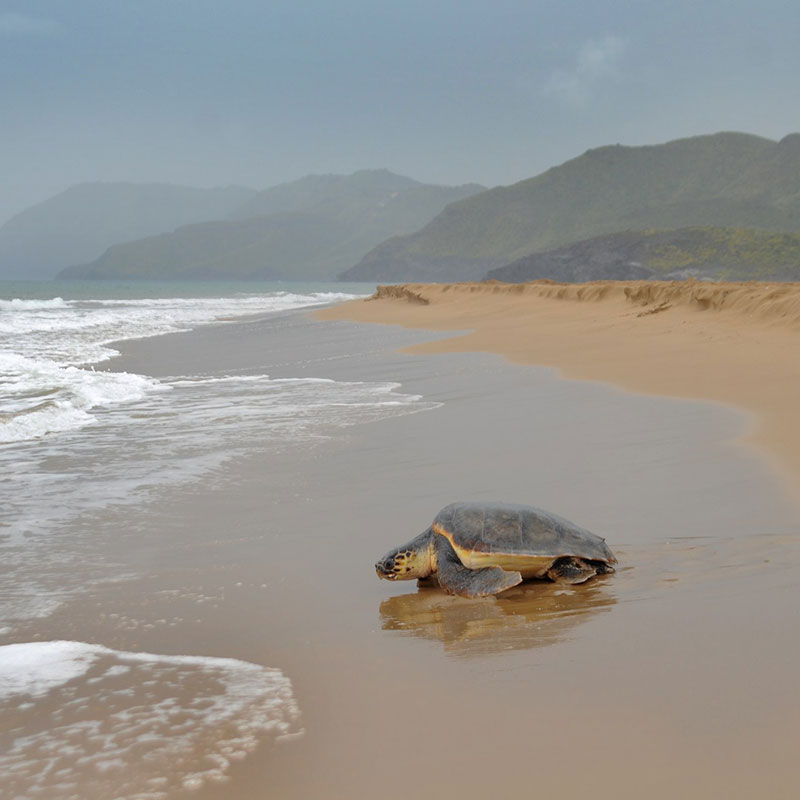
These sea turtles have found their own little paradise on beaches in the Region of Murcia, where they come to nest at the end of spring and during the summer. Their nesting sites are becoming increasingly numerous and are found, for example, in La Manga and in the Calblanque, Monte de las Cenizas y Peña del Águila Regional Park. Their presence on our coast is supported by a range of conservation actions.

This is the most common of the three dolphin species that live in the Mediterranean waters surrounding the region. It's also the largest. These dolphins live by the coast, although they also swim in deeper waters. Interestingly, the ones that live in the open sea are larger than the ones living by the coast. The Gulf of Mazarrón and the Murcian stretch of the Gulf of Vera are two exceptional spots for sightings along the coast.
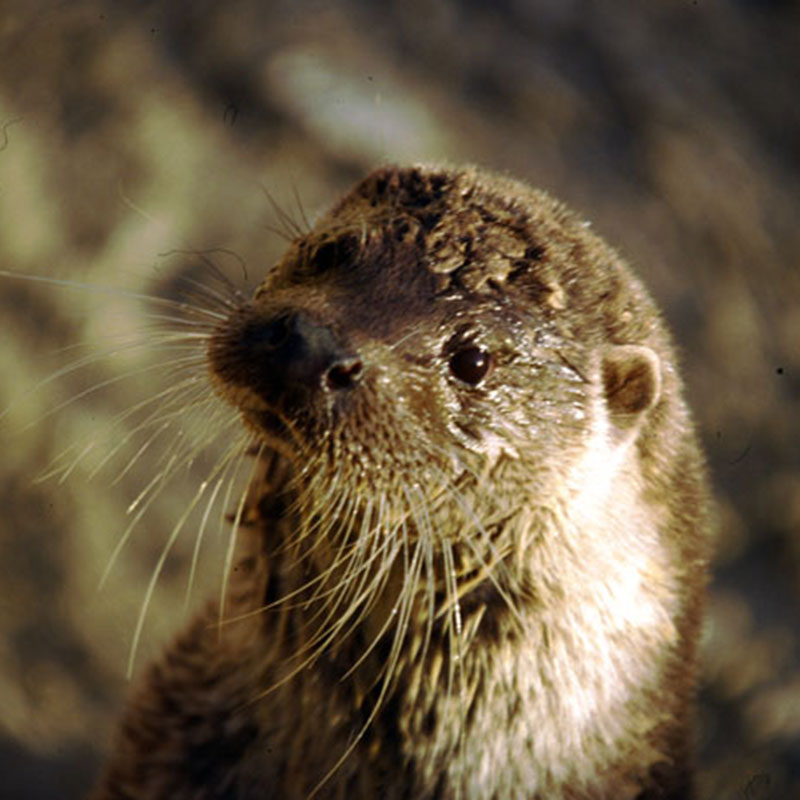
This large carnivore swims in several rivers throughout our region, although the most stable population is found in the Segura River. They patrol their territory in search of the vertebrates and crustaceans as their main food source and seek shelter among riparian plants. Their presence is a sign of environmental quality. This is the most representative wildlife species found in the Cañaverosa Nature Reserve.
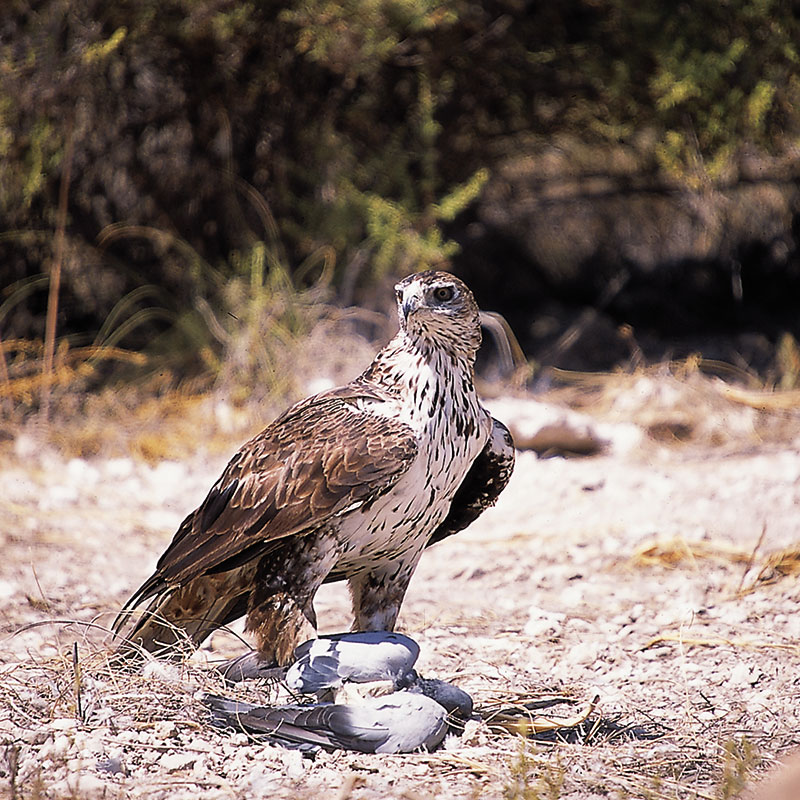
The most agile of our great eagles is a symbol of Mediterranean coastal foothills and mountains, where it finds rocky cliffs perfect for nesting. It feeds mainly on partridges, although it also feeds on rabbits and ocellated lizards depending on the time of year. Key populations are found in La Muela-Cabo Tiñoso, La Almenara and Cabo Cope.
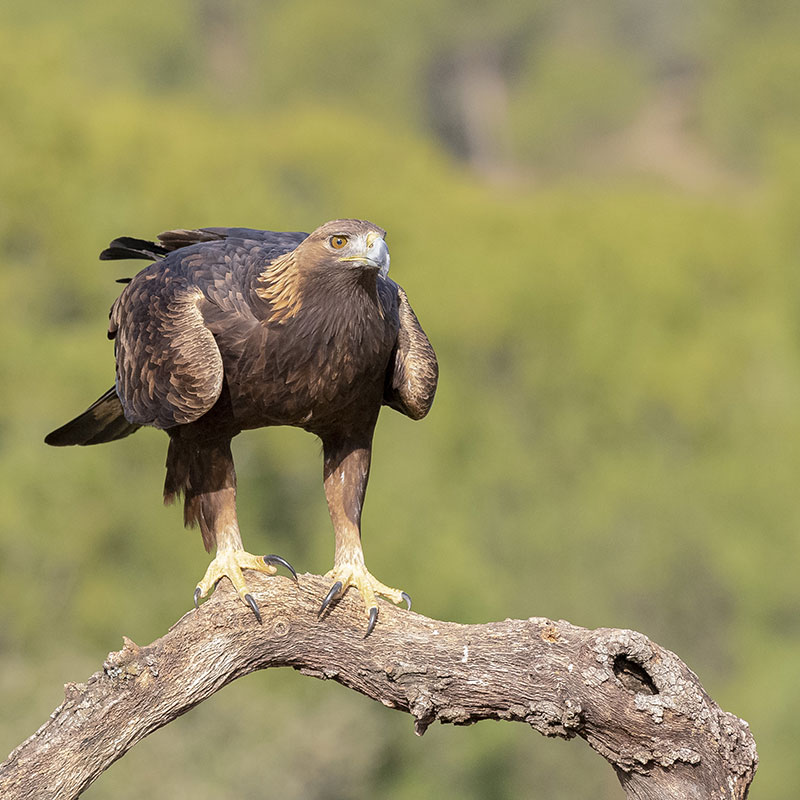
With a wingspan of over two metres long and a robust build, the golden eagle is the largest eagle found on the Iberian Peninsula. `Power is perhaps the word that best describes this beautiful bird of prey, which is found throughout the mountains in the Region of Murcia. Look to the skies and you might see it soaring majestically above.
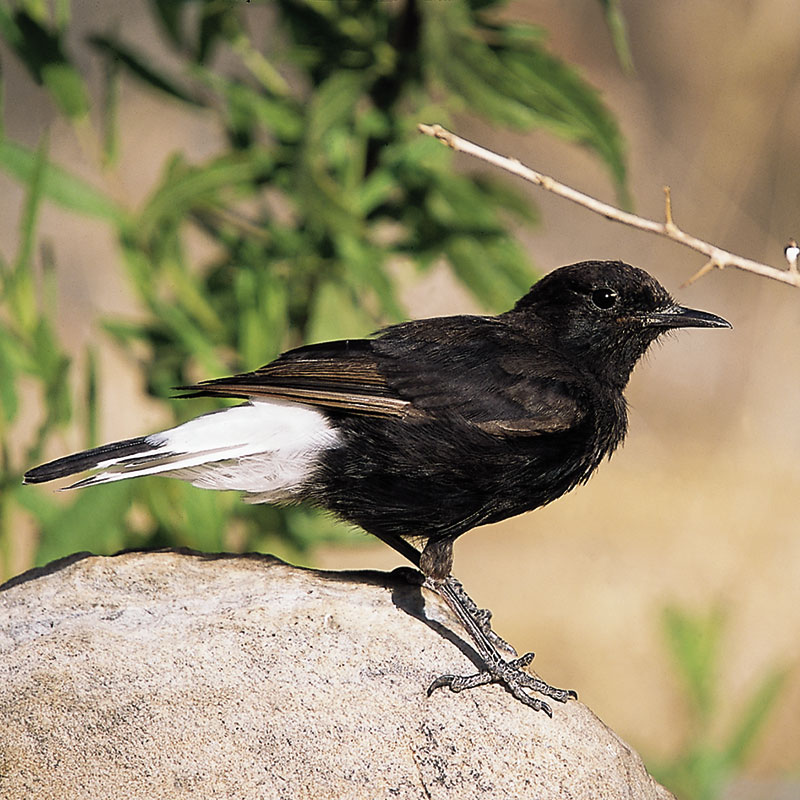
This distinctive bird, with dark plumage and a partially white tail, lives in arid, stony and sparsely vegetated areas in the warmer, drier regions of the Iberian Peninsula and North Africa. The Region of Murcia, specifically the Calblanque, Monte de las Cenizas y Peña del Águila Regional Park, is one of the best places to spot it. Their presence is an indicator of a healthy ecosystem.
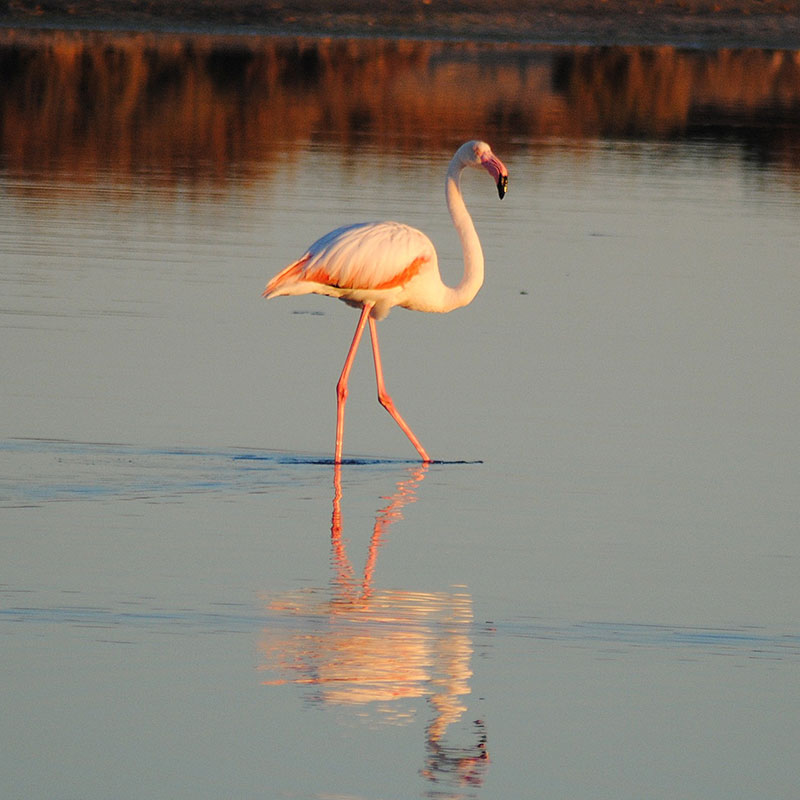
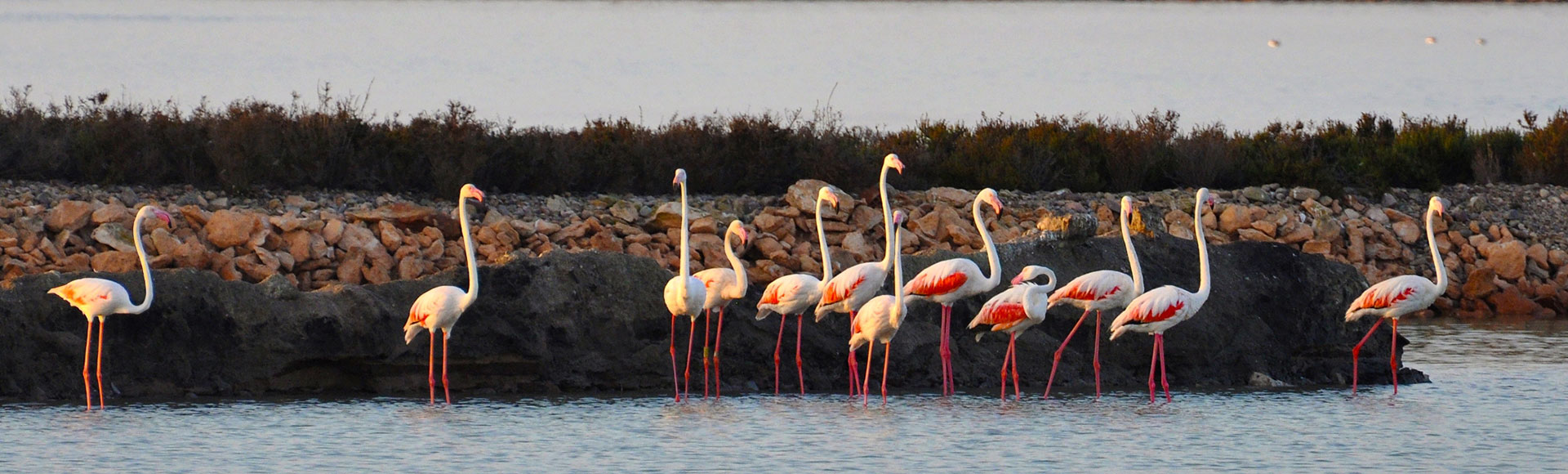
An unmistakable gregarious bird, with long legs and an elegant neck. Its pink colour becomes more vibrant with age. It lives in the shallow waters of lagoons and salt ponds, searching the mud to feed on micro-organisms using its peculiar curved filtering beak. It's easy to spot it in our region in the Mar Menor environment, in natural areas like the Salinas y Arenales de San Pedro del Pinatar Regional Park. You can appreciate this colourful bird at various birdwatching observatories.
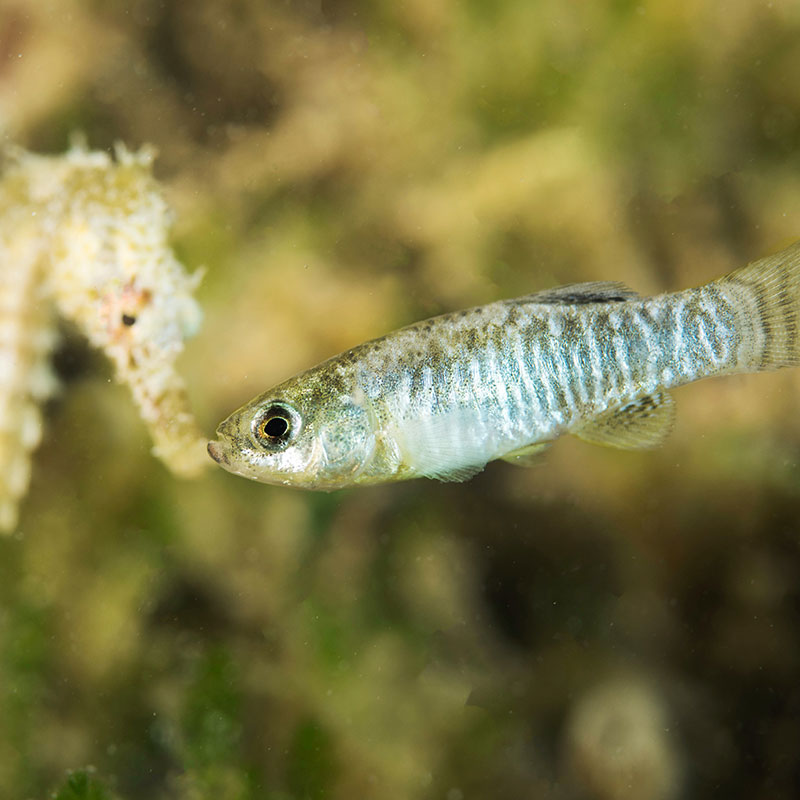
Endemic to the Iberian Peninsula, this small fish is highly endangered. It's barely five centimetres long and has a stocky body with round fins. In the past, it could be found in the Segura River and in irrigation channels across the area of Huerta de Murcia, but numbers have now reduced; today, it¿s limited to the Mar Menor coastal lagoon and surrounding wetlands, with just a few remaining in the Chícamo River. Both populations show greater genetic variability than those in the rest of the peninsula. Recently, it has also been found in the Rambla Salada area and in the tailwaters of Santomera Reservoir.
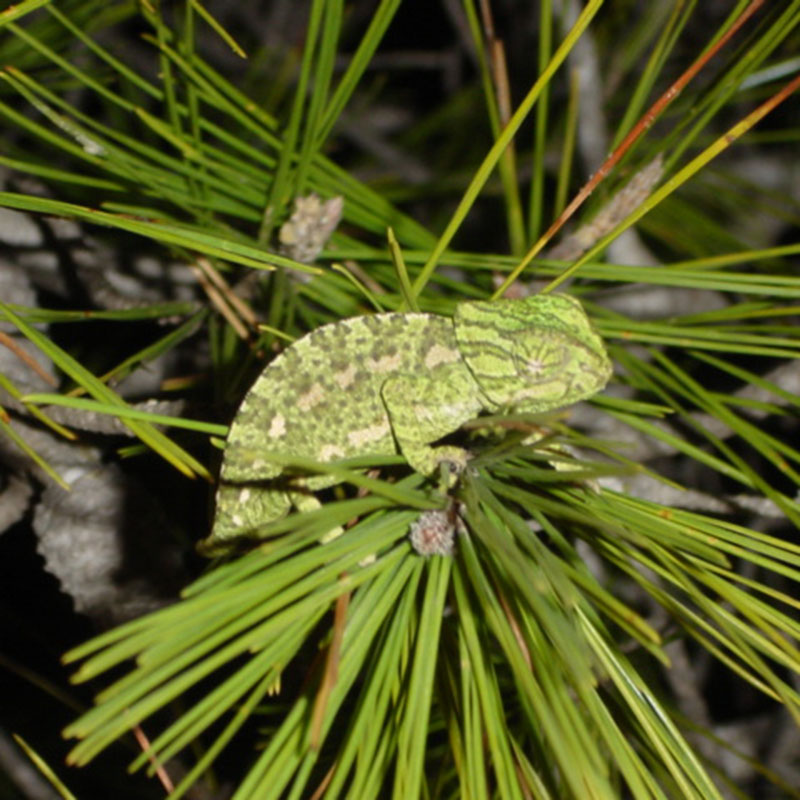
The Region of Murcia has significant populations of this unique arboreal reptile, the only one of its family in Europe. It can reach up to 30 centimetres in length and thrives in scrubland, dune environments and coastal pine forests. Found in the coastal foothills of Murcia and Cartagena, its population density is particularly high in the Salinas y Arenales de San Pedro del Pinatar Regional Park, the Calblanque Regional Park, and the El Valle y Carrascoy Regional Park. It adapts to other environments and can be found in rainfed tree crops. Numbers are currently increasing in our region.
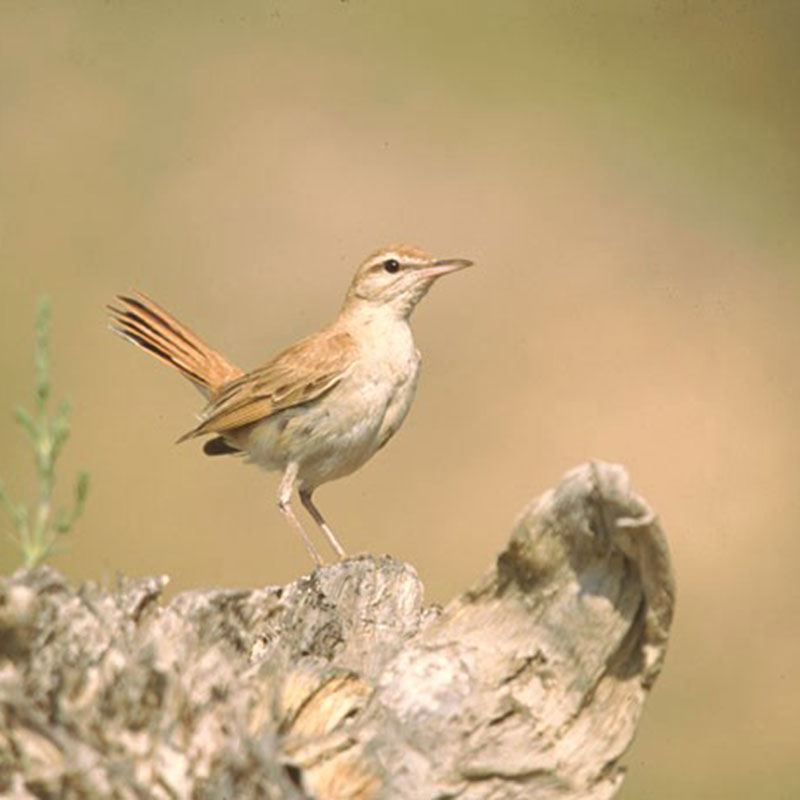
As elsewhere across the Iberian Peninsula, this species is in decline in our region due to habitat loss caused by changes in farming techniques, particularly the transition from dry farming to intensive agriculture. This is an endangered bird whose breeding pairs are almost exclusively found in the lowlands and dry riverbeds of the Mazarrón and Águilas mountains. It's a bioindicator of a high-quality ecosystem, and it usually moves along the ground and low scrubland in search of insects. It gets its name from its characteristic behaviour of raising and unfurling its reddish tail. Walk calmly and keep your eyes open to spot it.
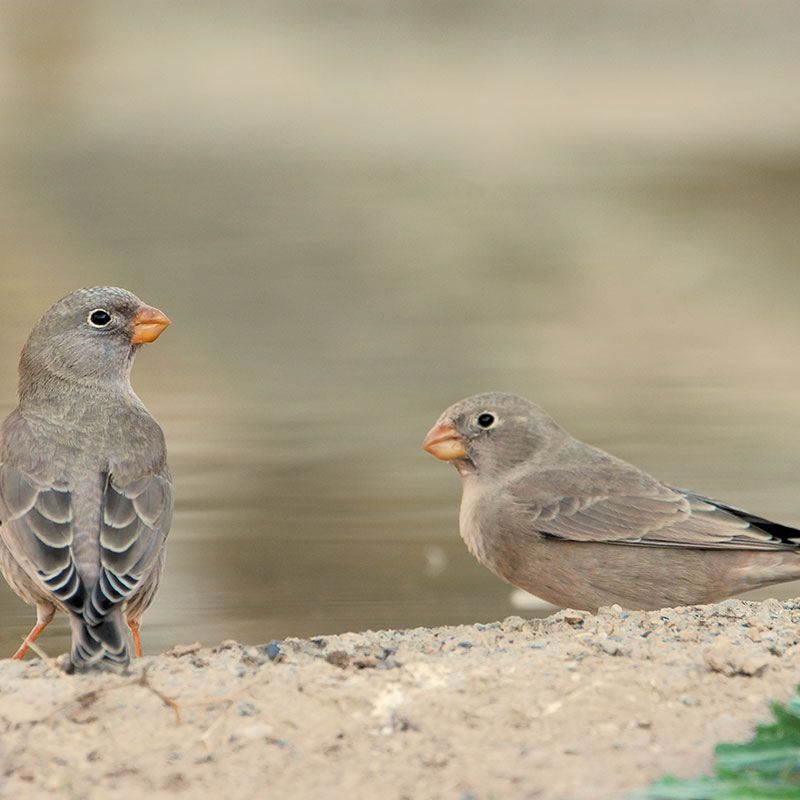
This small granivorous bird is native to North Africa, but there are small populations scattered throughout specific areas in the southeast of the Iberian Peninsula and the Canary Islands. The Region of Murcia is one of the best birdwatching tourism destinations for this species, typical of sub-desert habitats, areas of scattered scrubland and generally stony soils in ravines and dry riverbeds. It gets its name from the characteristic long nasally sound of its song. Cabo Cope Regional Park, Puntas de Calnegre and the Chícamo River Reserve (SAC) are great places to spot trumpeter finches.
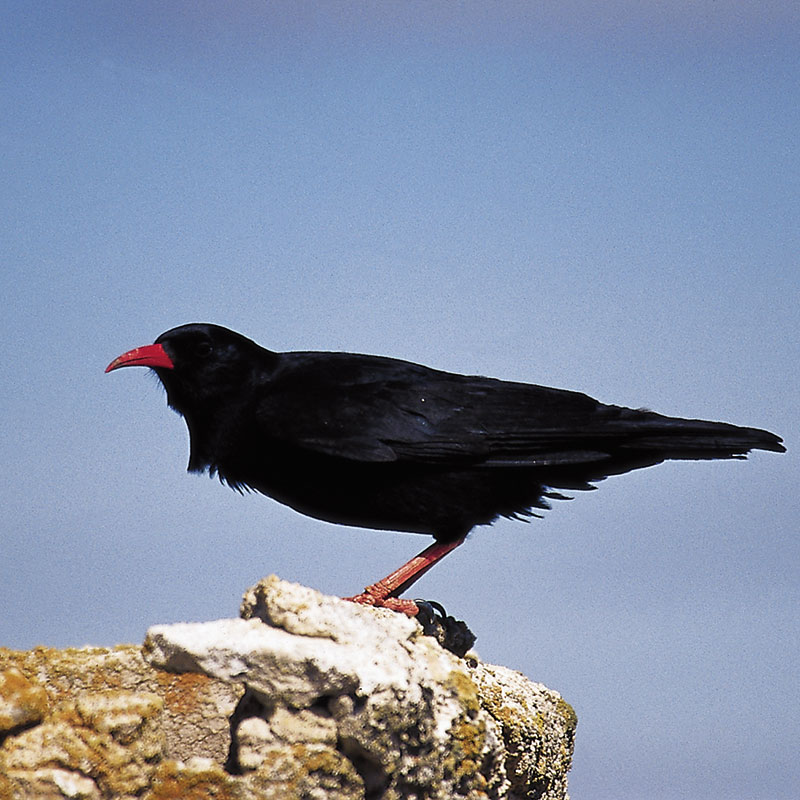
This mountain corvid, with its shiny black plumage, red legs and red beak, thrives like few others in the most remote areas of the region, dominated by steep, rocky cliffs. It shares its rocky habitat with birds such as the golden eagle, peregrine falcon and eagle owl. There are representative populations in the Sierra de la Pila Regional Park and in the El Valle y Carrascoy Regional Park.
These sea turtles have found their own little paradise on beaches in the Region of Murcia, where they come to nest at the end of spring and during the summer. Their nesting sites are becoming increasingly numerous and are found, for example, in La Manga and in the Calblanque, Monte de las Cenizas y Peña del Águila Regional Park. Their presence on our coast is supported by a range of conservation actions.
This is the most common of the three dolphin species that live in the Mediterranean waters surrounding the region. It's also the largest. These dolphins live by the coast, although they also swim in deeper waters. Interestingly, the ones that live in the open sea are larger than the ones living by the coast. The Gulf of Mazarrón and the Murcian stretch of the Gulf of Vera are two exceptional spots for sightings along the coast.
This large carnivore swims in several rivers throughout our region, although the most stable population is found in the Segura River. They patrol their territory in search of the vertebrates and crustaceans as their main food source and seek shelter among riparian plants. Their presence is a sign of environmental quality. This is the most representative wildlife species found in the Cañaverosa Nature Reserve.
The most agile of our great eagles is a symbol of Mediterranean coastal foothills and mountains, where it finds rocky cliffs perfect for nesting. It feeds mainly on partridges, although it also feeds on rabbits and ocellated lizards depending on the time of year. Key populations are found in La Muela-Cabo Tiñoso, La Almenara and Cabo Cope.
With a wingspan of over two metres long and a robust build, the golden eagle is the largest eagle found on the Iberian Peninsula. `Power is perhaps the word that best describes this beautiful bird of prey, which is found throughout the mountains in the Region of Murcia. Look to the skies and you might see it soaring majestically above.
This distinctive bird, with dark plumage and a partially white tail, lives in arid, stony and sparsely vegetated areas in the warmer, drier regions of the Iberian Peninsula and North Africa. The Region of Murcia, specifically the Calblanque, Monte de las Cenizas y Peña del Águila Regional Park, is one of the best places to spot it. Their presence is an indicator of a healthy ecosystem.
An unmistakable gregarious bird, with long legs and an elegant neck. Its pink colour becomes more vibrant with age. It lives in the shallow waters of lagoons and salt ponds, searching the mud to feed on micro-organisms using its peculiar curved filtering beak. It's easy to spot it in our region in the Mar Menor environment, in natural areas like the Salinas y Arenales de San Pedro del Pinatar Regional Park. You can appreciate this colourful bird at various birdwatching observatories.
Endemic to the Iberian Peninsula, this small fish is highly endangered. It's barely five centimetres long and has a stocky body with round fins. In the past, it could be found in the Segura River and in irrigation channels across the area of Huerta de Murcia, but numbers have now reduced; today, it¿s limited to the Mar Menor coastal lagoon and surrounding wetlands, with just a few remaining in the Chícamo River. Both populations show greater genetic variability than those in the rest of the peninsula. Recently, it has also been found in the Rambla Salada area and in the tailwaters of Santomera Reservoir.
The Region of Murcia has significant populations of this unique arboreal reptile, the only one of its family in Europe. It can reach up to 30 centimetres in length and thrives in scrubland, dune environments and coastal pine forests. Found in the coastal foothills of Murcia and Cartagena, its population density is particularly high in the Salinas y Arenales de San Pedro del Pinatar Regional Park, the Calblanque Regional Park, and the El Valle y Carrascoy Regional Park. It adapts to other environments and can be found in rainfed tree crops. Numbers are currently increasing in our region.
As elsewhere across the Iberian Peninsula, this species is in decline in our region due to habitat loss caused by changes in farming techniques, particularly the transition from dry farming to intensive agriculture. This is an endangered bird whose breeding pairs are almost exclusively found in the lowlands and dry riverbeds of the Mazarrón and Águilas mountains. It's a bioindicator of a high-quality ecosystem, and it usually moves along the ground and low scrubland in search of insects. It gets its name from its characteristic behaviour of raising and unfurling its reddish tail. Walk calmly and keep your eyes open to spot it.
This small granivorous bird is native to North Africa, but there are small populations scattered throughout specific areas in the southeast of the Iberian Peninsula and the Canary Islands. The Region of Murcia is one of the best birdwatching tourism destinations for this species, typical of sub-desert habitats, areas of scattered scrubland and generally stony soils in ravines and dry riverbeds. It gets its name from the characteristic long nasally sound of its song. Cabo Cope Regional Park, Puntas de Calnegre and the Chícamo River Reserve (SAC) are great places to spot trumpeter finches.
This mountain corvid, with its shiny black plumage, red legs and red beak, thrives like few others in the most remote areas of the region, dominated by steep, rocky cliffs. It shares its rocky habitat with birds such as the golden eagle, peregrine falcon and eagle owl. There are representative populations in the Sierra de la Pila Regional Park and in the El Valle y Carrascoy Regional Park.
The Region of Murcia's diverse climate, geography and soil types, along with its location¿the mid-point between Europe and North Africa - mean it has a great diversity of flora, reflected in the presence of almost 2,500 taxa (species and subspecies). Of these, almost a fifth are endemic to the Iberian Peninsula.
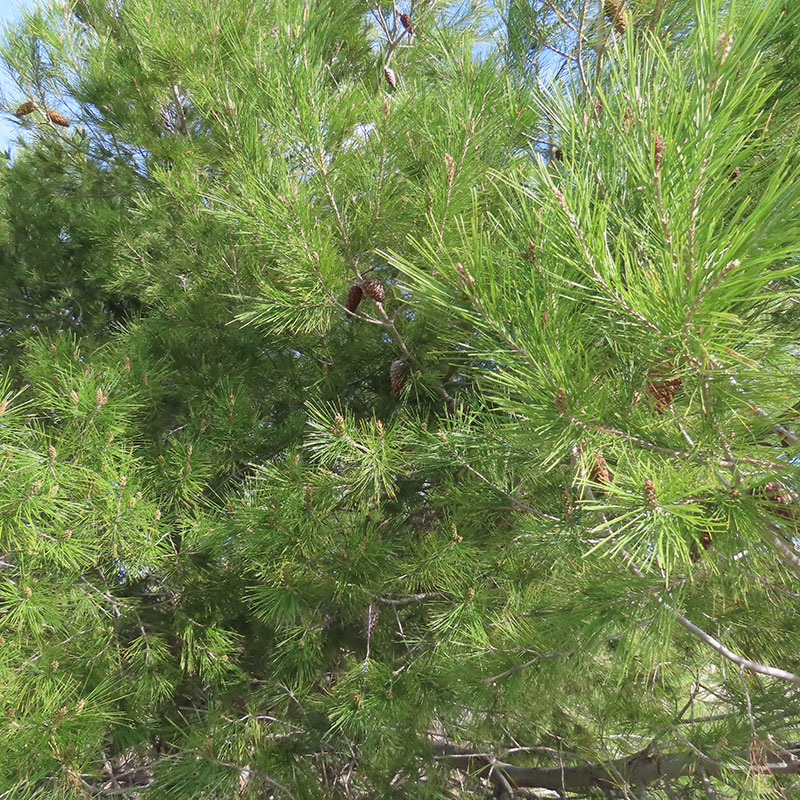
Found from sea level all the way up to our mountain ranges, this is the most abundant and widespread forest tree in our region, accounting for 80% of woodland. The Pino de las Águilas (Eagle Pine) in Campo de Cagitán (Mula) is one of the oldest, most famous trees due to the trunk's girth measuring 6.41 metres, making it the thickest (and oldest) in the world. This fragrant conifer will line many of your walks through our natural areas and ecotourism destinations, filling the air with its distinctive scent.
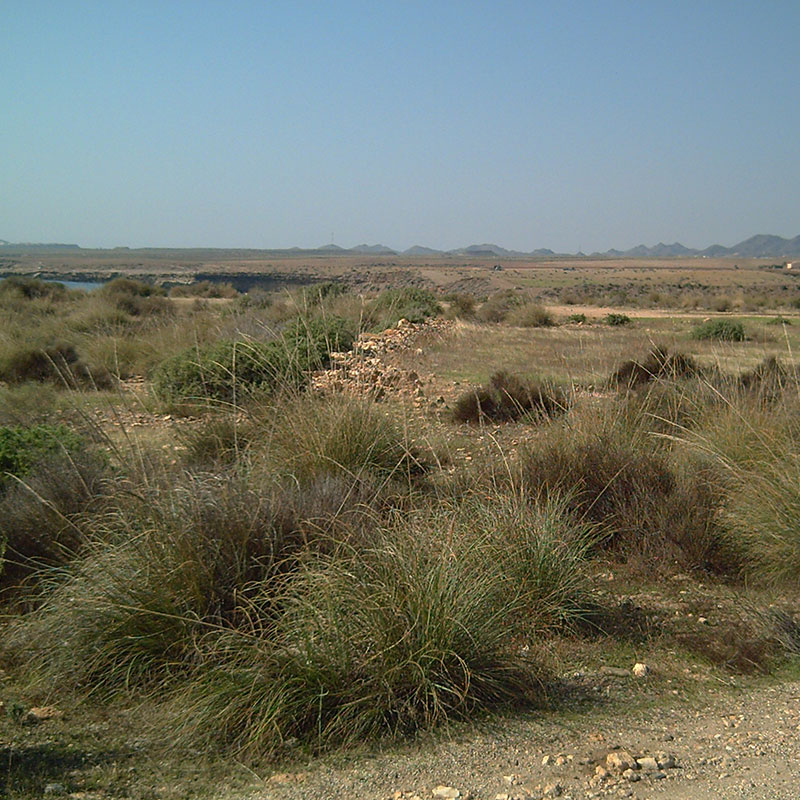
This grassy plant is typical of steppe environments. It's a native plant that once played a key role in local crafts, used to make all kinds of equipment. You'll find it in the south of the province and in warm area in the northwest. You can learn more about this plant at the Esparto Museum in Cieza. The Spartaria project aims to combat forest neglect by adapting forest cover for the use of resources and environmental restoration, promoting diversification and ensuring year-round economic viability.
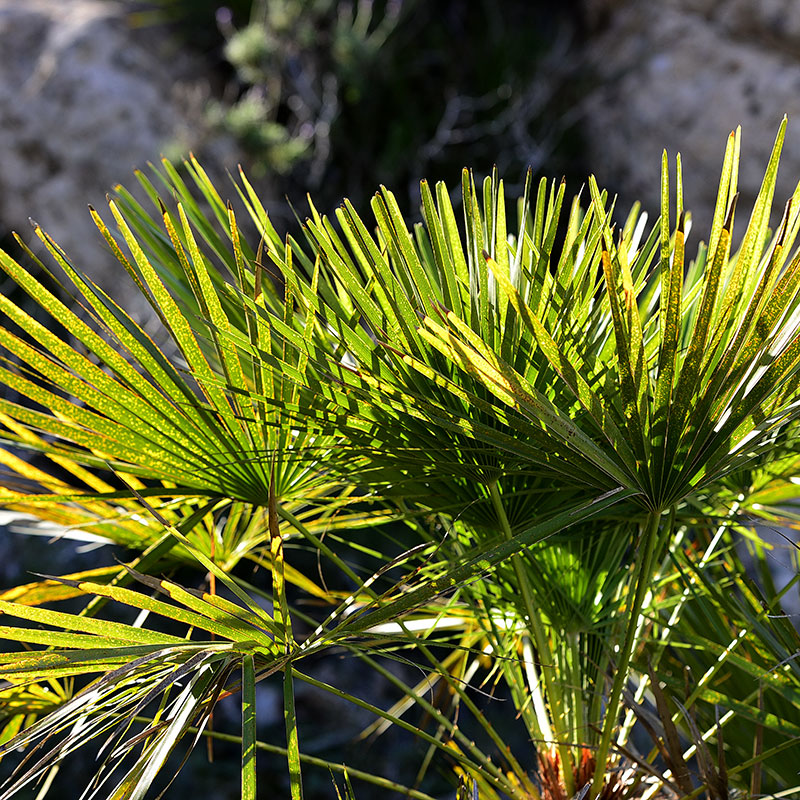
This is the only palm native to the Iberian Peninsula. It can be found extensively throughout the Region of Murcia, especially in coastal and arid areas, where it grows along almost every ecotourism route in Calblanque or La Muela-Cabo Tiñoso. It forms thickets known as palm groves and rarely grows above 4 metres tall. The fan palm has traditionally been used to make equipment such as baskets and brooms, and its buds are edible.
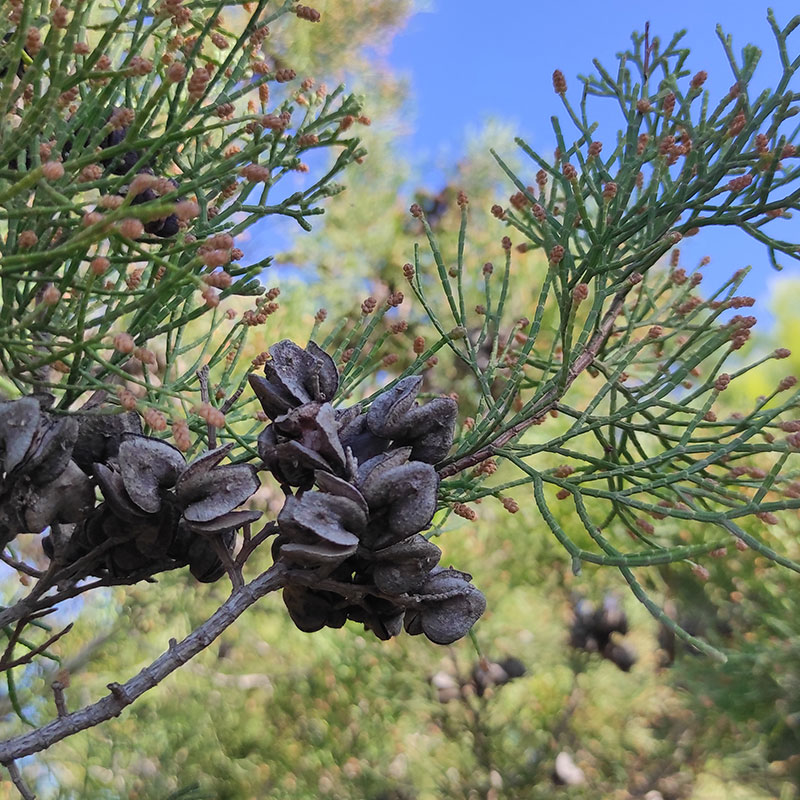
The Cartagena cypress grows only in Malta and Spain. In our country, the only wild populations are found in the Region of Murcia, specifically in the Calblanque Regional Park. A monumental tree can be found in the Sierra Espuña Regional Park (Sabina de Huerta Espuña), planted almost 150 years ago. It's around 20 metres tall and 2.2 metres in diameter. This is the largest in existence.
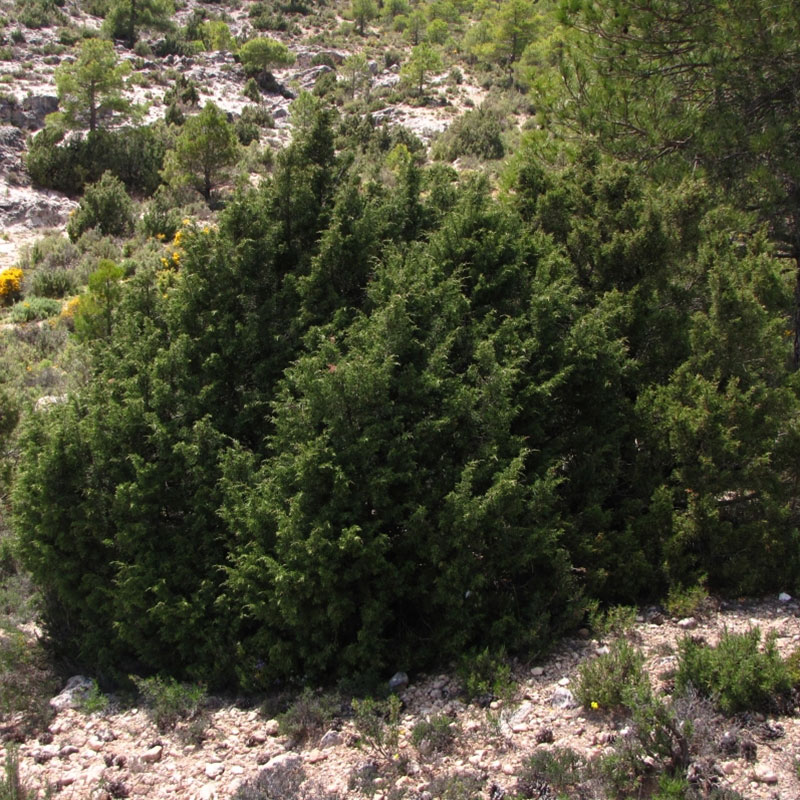
This evergreen tree is highly valued for its quality fragrant wood. Endemic to the Iberian Peninsula, it can be found in the limestone mountain moorlands; in our region, it grows in small woods in Caravaca and Moratalla. In the latter, specifically in the village of El Sabinar, there's a major cluster of Spanish juniper, one of the most southerly in Europe. Moratalla is also home to a monumental tree called the Martín Herrero Juniper. It's 13.5 metres tall and the trunk's girth is 5.5 metres far from small!
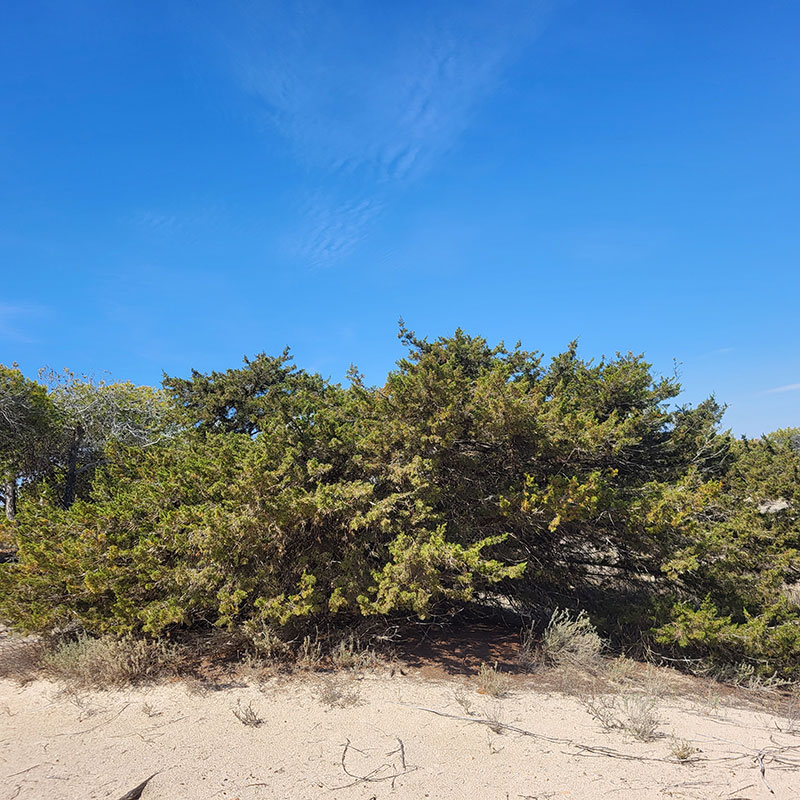
This generally shrubby conifer grows among dunes and coastal sands in the western Mediterranean, south and east of the Iberian Peninsula and the Balearic Islands. In the Region of Murcia there were only 11 trees of natural origin left in the 20th century (San Pedro del Pinatar), but thanks to repopulation efforts carried out in recent decades, it has now recovered. Fancy seeing it? The Salinas y Arenales de San Pedro del Pinatar Regional Park and the nearby area of Las Amoladeras are the places to visit.
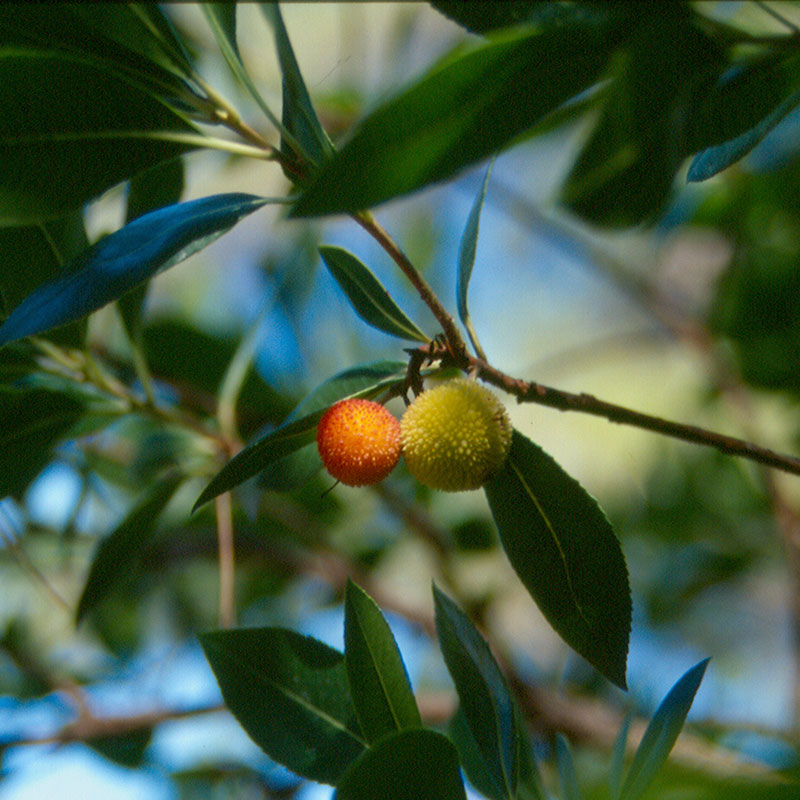
Shrub/small tree that tends not to grow above 7 metres high. This is a strange species, as its branches bear flowers and fruit at the same time. When ripe in late autumn, its fleshy, rounded fruit takes on a striking reddish colour, and is enjoyed by many different animals. It typically grows among humid inland holm oak and kermes oak groves, although it can also appear in the undergrowth of pine forests. Key populations are found in the Sierra de la Pila Regional Park and in the Sierra de Ricote.
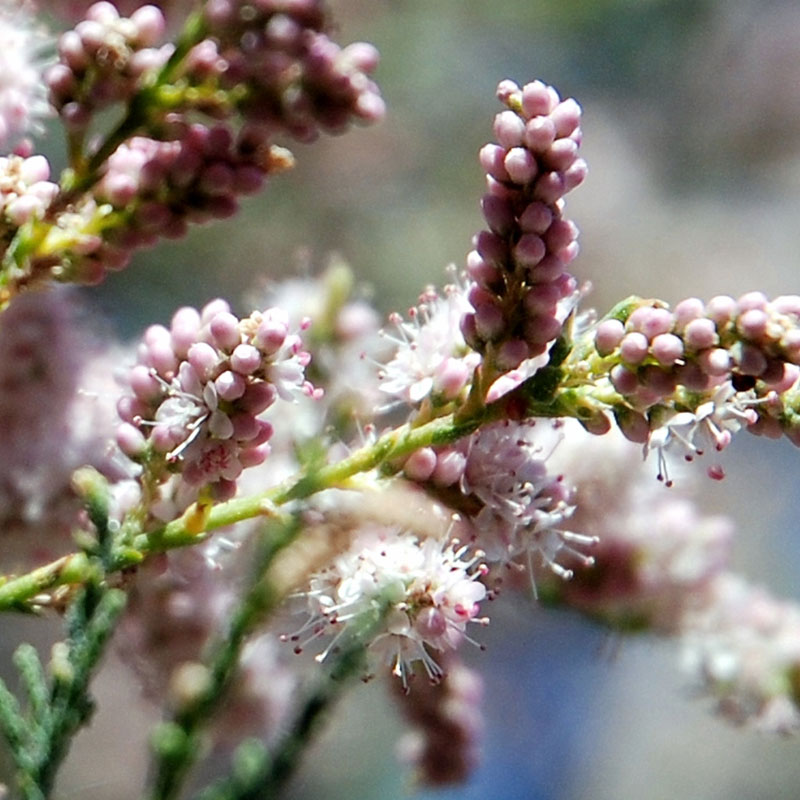
Our region is home to several species of tamarisk, which are highly characteristic of local riverside habitats. It usually grows alone or in small groups, forming tamarisk groves in salt marshes and salty dry riverbeds. In its natural form, it grows as a densely branched shrub, although in the Campo de Cartagena, human intervention has transformed it into a tree. The Lo Santero Tamarisk (Torre-Pacheco) has a trunk measuring 5.2 metres in girth, which is quite extraordinary for Spain. Monumental tamarisks can also be seen in the Ajauque y Rambla Salada wetland.
Found from sea level all the way up to our mountain ranges, this is the most abundant and widespread forest tree in our region, accounting for 80% of woodland. The Pino de las Águilas (Eagle Pine) in Campo de Cagitán (Mula) is one of the oldest, most famous trees due to the trunk's girth measuring 6.41 metres, making it the thickest (and oldest) in the world. This fragrant conifer will line many of your walks through our natural areas and ecotourism destinations, filling the air with its distinctive scent.
This grassy plant is typical of steppe environments. It's a native plant that once played a key role in local crafts, used to make all kinds of equipment. You'll find it in the south of the province and in warm area in the northwest. You can learn more about this plant at the Esparto Museum in Cieza. The Spartaria project aims to combat forest neglect by adapting forest cover for the use of resources and environmental restoration, promoting diversification and ensuring year-round economic viability.
This is the only palm native to the Iberian Peninsula. It can be found extensively throughout the Region of Murcia, especially in coastal and arid areas, where it grows along almost every ecotourism route in Calblanque or La Muela-Cabo Tiñoso. It forms thickets known as palm groves and rarely grows above 4 metres tall. The fan palm has traditionally been used to make equipment such as baskets and brooms, and its buds are edible.
The Cartagena cypress grows only in Malta and Spain. In our country, the only wild populations are found in the Region of Murcia, specifically in the Calblanque Regional Park. A monumental tree can be found in the Sierra Espuña Regional Park (Sabina de Huerta Espuña), planted almost 150 years ago. It's around 20 metres tall and 2.2 metres in diameter. This is the largest in existence.
This evergreen tree is highly valued for its quality fragrant wood. Endemic to the Iberian Peninsula, it can be found in the limestone mountain moorlands; in our region, it grows in small woods in Caravaca and Moratalla. In the latter, specifically in the village of El Sabinar, there's a major cluster of Spanish juniper, one of the most southerly in Europe. Moratalla is also home to a monumental tree called the Martín Herrero Juniper. It's 13.5 metres tall and the trunk's girth is 5.5 metres far from small!
This generally shrubby conifer grows among dunes and coastal sands in the western Mediterranean, south and east of the Iberian Peninsula and the Balearic Islands. In the Region of Murcia there were only 11 trees of natural origin left in the 20th century (San Pedro del Pinatar), but thanks to repopulation efforts carried out in recent decades, it has now recovered. Fancy seeing it? The Salinas y Arenales de San Pedro del Pinatar Regional Park and the nearby area of Las Amoladeras are the places to visit.
Shrub/small tree that tends not to grow above 7 metres high. This is a strange species, as its branches bear flowers and fruit at the same time. When ripe in late autumn, its fleshy, rounded fruit takes on a striking reddish colour, and is enjoyed by many different animals. It typically grows among humid inland holm oak and kermes oak groves, although it can also appear in the undergrowth of pine forests. Key populations are found in the Sierra de la Pila Regional Park and in the Sierra de Ricote.
Our region is home to several species of tamarisk, which are highly characteristic of local riverside habitats. It usually grows alone or in small groups, forming tamarisk groves in salt marshes and salty dry riverbeds. In its natural form, it grows as a densely branched shrub, although in the Campo de Cartagena, human intervention has transformed it into a tree. The Lo Santero Tamarisk (Torre-Pacheco) has a trunk measuring 5.2 metres in girth, which is quite extraordinary for Spain. Monumental tamarisks can also be seen in the Ajauque y Rambla Salada wetland.


