THE CATHEDRAL HOSTEL

Youth hostels

Murcia

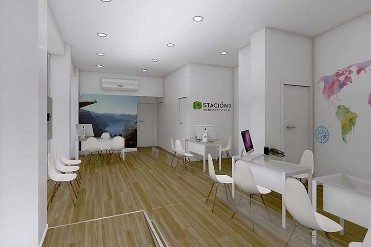
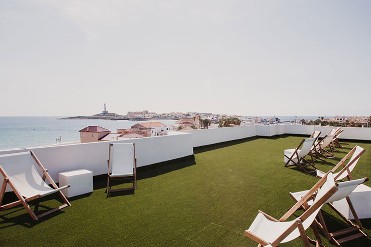
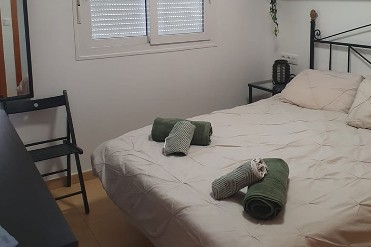
Hostel de Murcia situado en pleno centro de la ciudad. Estamos situados a escasos metros de la catedral en la famosa calle Trapería, vía principal del casco antiguo y con comercios, restaurantes y todo tipo de servicios. The Cathedral Hostel está situado en un precioso edificio clásico del siglo XX. En este se mezcla nuestras modernas instalaciones con los materiales nobles de la casa. Son espacios luminosos con grandes puertas de madera guardando su estructura de amplias dimensiones, suelos originales en diferentes colores y zócalo con dibujo arabesco. Disponemos de una sala común así como de una cocina compartida. Los baños están totalmente reformados. HORARIOS Check In de 12:00 a 14:00 h. y de 17:00 a 22:00 h. Check Out a las 11:00 h.

The Cave of The Serreta

Rock art

Cieza

Se encuentra en el margen izquierdo del río Segura, en el borde del cañón cárstico de "Los Almádenes". Otra apertura, de grandes dimensiones, se abre hacia el interior del mencionado desfiladero permitiendo una gran iluminación natural de las pinturas rupestres así como la zona más habitable de la cavidad. En total aparecen en la cavidad 50 figuras, repartidas en dos paneles y pertenecientes en su totalidad al Arte Rupestre Esquemático, que incluye en este caso algunas figuras del estilo seminaturalista.

THE GUARDIAN ANGEL
THE GUARDIAN ANGEL

Monuments

Cartagena

A sculpture representing the Guardian Angels in Carmen Street, by the sculptor Juan José Quirós from Cartagena. The statue, 1.8 metres high on a pedestal of 50 centimetres, it weighs 800 kilos and makes Cartagena the first city in Spain to have a monument in honour of the patron of the National Police Corps.

THE HAVEN
THE HAVEN

Holiday accommodation

Fortuna

THE HERMITAGE OF SAINT COSME AND SAINT DAMIAN

Monuments

Abarán

The Hermitage is located in one of the highest areas of the town centre, which is also an emblematic place of Abarán by excellence. Its enclosure houses a balcony overlooking the river and the mountains, as well as a promenade from which it takes its name. This religious building, dedicated to the Santos médicos , dating from 1953 (the original dating from the 16th century). The statues of the Saints, Cosme and Damián, located in the chapel of the main Altar, are from the 18th century. A sculpture of the Crucified Christ, by José Planes, stands out in the church. In 1992, the painter Luis Molina completed the first phase of the decoration of the chapel of Abarán, which consisted of four scenes representing the most transcendental moments in the life of the patron saints of the town, motifs that refer to the healing of a camel, the healing of Palladia, the Martyrdom of the Fire and the Beheading. The work was commissioned by the Brotherhood of San Cosme and San Damián, and the paintings, which are figurative and classical in style, are located on the pendentives of the dome of the Hermitage. The outside of the temple has a traditional brick structure, two towers and a magnificent set of domes.

The Magic Room Murcia

Escape room

Molina de Segura

THE MARINE SCULPTUR
THE MARINE SCULPTUR

Monuments

Cartagena

First monument of the country to the Spanish Marine, in Plaza del Rey in Cartagena. It consists of a life-size bronze statue of a Marine marching at a slow pace, made by the sculptor Jorge Aznar and which is added to other characteristic figures of the Armed Forces. With this monument, made with bronze pieces contributed by the Navy, it is paying homage to the Marines, one of the oldest units that exist in the city.

The Maritime Centre & Aquarium

Visitor centers

Águilas

THE MELON FESTIVITIES TORRE PACHECO

Festivities

Torre Pacheco

Melons are a unique reference within our Region, and especially, they are one of the most important and typical products of the agricultural sector in our municipality. The main emblem of Torre Pacheco is the melon, and it has always been famous for its taste and sweetness. In 2010, it was distinguished by the Ministery of Agriculture as one of the highest quality fruits in Spain with the PGI denomination (Protected Geographical Indication). Numerous varieties are cultivated such as: Cantaloupe, Galia, Yellow, but the most valued is "Piel de sapo". The Melon Festivities were created in 1969 to promote the agricultural activity of the municipality of Torre Pacheco, called Agricultural Week, and became an important forum to defend the interests of farmers. For this first event, Ministers, Deputy Ministers, General Directors related to agriculture, mayors and a large number of farmers from other municipalities visited our town making it the agricultural capital of the Campo de Cartagena. Soon these festivities would take hold in Pacheco society and Torre Pacheco began to make headlines in the most important media of the time, both nationally and internationally. The festivities are celebrated in the month of June with a very varied programme of activities. The neighbours and visitors can enjoy radio programmes, the Melon shop window competition, the "Melon Olympics", exhibitions, the Photography competition "The Melon in all its senses", concerts, cooking workshops, tastings, storytelling, and so on. In addition, restaurant owners participate in the preparation of menus in their restaurants, where the melon as the protagonist. During the summer season, for more than 40 years, one of the most popular flamenco competitions has been held in the small town of Lo Ferro in Torre Pacheco: "Flamenco Festival in Lo Ferro". It involves a whole series of musical shows, concerts, recitals or performances that have this art as a common denominator. Its programme includes both new and established artists, as well as the contestants themselves who compete for the distinguished "Melón de Oro" award. This award is another example of the importance of this product in our municipality.

The Molinete Tower
The Molinete Tower

Monuments

Mazarrón

Elevated in a hill, the Molinete Tower can be found, also known as the Tower of the Catholic Monarchs. It is a watchtower in a circular shape, raised on a small promontory, close to Los Vélez Castle. The Molinete Tower was built by request of the Catholic Monarchs, who authorized it in 1490 as an appropriate structure for monitoring the coast. From its watchtower the coast could be controlled and measures could be taken for the area and the urban nucleus of Mazarrón to be protected against the frequent Barbary pirate invasions. The Tower is considered a Site of Cultural Interest.

The Old Market Place or Alarcos House

Monuments

Yecla

Originally, the building was probably built in the 16th century and it was initially used as a market. This building was right-angled built. On its ground floor an open or continuous gallery formed by ten round arches resting on square pillars stands out. At the end of the 19th century a new market was built, being several shops set up on its ground floor.

THE OSADOS CYCLING EXPERIENCES

Active tourism

Murcia

Agencia especializada en cicloturismo. Organización de vacaciones en bicicleta con todo incluido, y viajes guiados en bicicleta por la Región de Murcia.

The Roman House on Era Street

Monuments

Puerto de Mazarrón (Mazarrón)

In 1990, at the back of the ancient port located in an area called La Era, a necropolis and some Roman single-family homes were excavated. The most complex houses had a hall, bedrooms, patio, kitchen and a cistern. They resembled classic Roman house models, with a central room around which the other rooms were centered. One of these houses was preserved by request of the Directorate-General of Culture, due to its scientific, historical and educational interest, and to the fact that it had been well preserved. The house mentioned has a surface of 300 m2 and is one floor, with the following structure: a large central room with a bench and plastered walls, interpreted as the triclinium, or hall. On each side of this room there are two symmetrical rooms which are entered through the main room. In the north side there is a large room with water channels or gutters wich have been identified as a possible atrium or vestibule. Around this patio the pattern of two symmetrical parallel rooms repeats, one serving as water storage with a 2 m deep pool, located next to what can be assumed the kitchen of this Roman house. The house of Calle Era formed part of the urban area of Port of Mazarrón in Roman times and was set up around another group of homes and a network of streets and small alleyways. These houses are the only clearly residential nucleus of the late Roman period studied to date. They were built at the same time that the salting factory was fully functioning and at its peak (the 4th-5th centuries A.D.). Rests of materials found in the homes, such as the high number of coins and the richness of the domestic goods indicate that the site belonged to a sector with significant acquisition capabilities. We assume that we are looking at a population nucleus dedicated to administrative or commercial activity connected to the salted fish industry, where people conserved Roman traditions, way of living and urban layout, although with a local market as indicated by materials and the structural system.

The Roman Milestone
The Roman Milestone

Monuments

Puerto de Mazarrón (Mazarrón)

The Miliar term is applied to the posts, cairns or columns that were marking the distances in the ancient Roman roads. The Milestone of Mazarrón indicates the proximity of the Via Augusta road and has registered the following: "IMP.CAESAR DIVI F.AVGVSTVS COS XI TRIBUNIC.POTEST.XVI IMP.XIIII, PONTIFEX MAXIMVS.A LVCENTO EIOCROCAM.XXVIII MP REST". Translation: "Emperor Caesar Augustus, son of divinity, Consul XI times, tribunicia power XVI, Emperor XIIII, Pontifex Maximus, restored twenty eight thousand steps of the way from Lucentum to Eliocroca ".

THE ROSTRAL COLUMN
THE ROSTRAL COLUMN

Monuments

Cartagena

Commemorative monument of the centenary of the Board of Works of the Port in 1977. It is located in the port, next to the old Yatch Club and the Sailors' Training Barracks that currently houses new facilities of the Polytechnic University and the Naval Museum. The Rostral Column, a monument commemorating a naval battle that receives this name because its shaft is adorned with ship rams, was designed by Julio Mas García and his material execution corresponds to the sculptor Antonio García Mengual. The monument is made of stone from Sierra Minera in Cartagena-La Unión. At the base of the column several reproductions of amphoras were placed, alluding to the commercial character that has marked this port throughout its history.

THE SHED
THE SHED

Rural houses

Cañada de Canara (Cehegín)

THE TRAVEL VICDOME
THE TRAVEL VICDOME

Travel agencies

Totana

The Trinitarians Monument Sculpture

Monuments

Torre Pacheco

Sculpture by Pedro Jordán, made in 2009. Fray Juan Gil, a Trinitarian friar, was the person who on 19 September 1580 managed to collect the 500 gold ducats to free Miguel de Cervantes, who had been imprisoned by Berber pirates. He was captured when he returned to Spain after taking part in the Battle of Lepanto. The pirates asked for this large amount of money to free Cervantes because they mistook him for a prominent person in the Spanish Court, as they found in his possession letters of praise signed by Mr. Juan de Austria and the Duke of Sesa and highlighting his value at Lepanto as a soldier. Cervantes was imprisoned in Algiers for five years, until Fray Juan Gil managed to gather the money for his rescue. During the period between the 16th and 18th centuries, the Murcian coast was the target of numerous attacks carried out by North African pirates and corsairs. Numerous towers were built along the Murcian coast to help fight or try to repel this continuous series of attacks. The reason was to control trade in the Mediterranean, both by the Turkish and Spanish empires. The Trinitarian monks, who belonged to the Order of the Holy Trinity, were in charge of intermediating with the Berber pirates to rescue the captives. The Pacheco family, the founders of Torre Pacheco, had a special bond with this religious order. Dean Luis Pacheco, founder of the Parish of Torre Pacheco in 1603, left his inheritance to his nephew Juan Pacheco who belonged to the Trinitarian Order and was dedicated to saving prisoners. To recall this history, the sculptor Pedro Jordán has represented the Trinitarian holding in his left hand the shackles worn by Miguel de Cervantes as a symbol of his liberation.

THE VALLEY VIEWPOINT

Holiday accommodation

Blanca

The Villa of El Alamillo

Monuments

Puerto de Mazarrón (Mazarrón)

The Roman villae houses originated from the ancient agro-fishing character held by native Roman families. They consisted of a serf-sufficient inhabited nucleus, where frequently there was an infrastructure for exploiting farming resources, areas of artisan workshops, and in the villae in this area, industrial areas for salted fish preparation. This villa is a house that must have been built in the second half of the 1st century A.D. and was abandoned at the end of the next century, although perhaps continuing to be used until the first years of the 3rd century. Originally, it was a terraced construction differentiated into two parts: one residential area with corresponding thermal water pools; and another service or industrial part. This second part is now open for visitation, exhibiting the six salting basins dedicated to producing salted fish and Garum fish sauce along with a group of rooms around a patio. The villa’s economic activity would be focused on two sectors. On the one hand, the existence of basins leads us to believe it served a small-scale fishing business. On the other hand, this activity would be complemented with agricultural activities on their lands that could be irrigated thanks to the nearby El Alamillo Reservoir.


Versión accesible
Bono Turístico