

Festivals
Alhama de Murcia
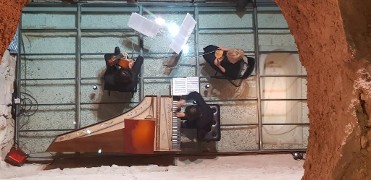
Every year, the Sierra Espuña region comes alive with the ECOS de Sierra Espuña Early Music Festival. The ECOS Early Music Festival in Sierra Espuña, organised by Early Music Project in collaboration with the Sierra Espuña Tourist Association and the University of Murcia, has been held annually since 2017 in the Region of Murcia, specifically in the municipalities of Aledo, Alhama de Murcia, Librilla, Mula, Pliego and Totana. The festival aims to achieve high musical standards by attracting music professionals from both Spain and abroad, to enrich the Region of Murcia’s tourist and cultural offering, and to promote the municipal and regional heritage. ECOS brings together concerts, nature, heritage, children’s activities and tourist experiences centred on early music. All this is further complemented by ECOS Labs, a series of training and supplementary activities designed to attract young professionals specialising in early music from around the world, equipping them with the tools to facilitate their integration into the international professional music scene. In 2026, the tenth edition of the ECOS FESTIVAL will take place, hosting musical performances in historic and natural settings within the municipalities of the Sierra Espuña Tourist Association,
Lugares de interés
La Manga San Javier (La Manga del Mar Menor)
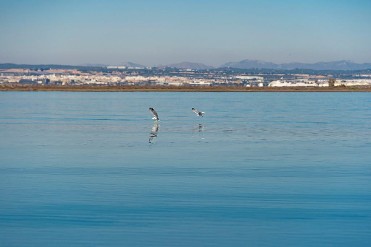
The salt flats consist of a wetland with sandbanks located north of La Manga and are an important part of the Mar Menor, considered a Specially Protected Area of Mediterranean Importance (SPAMI). They cover a total area of 837 hectares and are shared by the municipalities of San Javier and San Pedro. Various local ecosystems can be found, ranging from salt ponds, reed beds, salt marshes, dunes, and channels to fishing enclosures. It is a wetland with sandbanks that borders the south with fishing enclosures and cahnnels that lead to the Mediterranean Sea. In these wetlands, coastal dunes and sandy areas stand out, in addition to sandy bars that cushion the waves in the Mediterranean areas, favoring the presnece of Posiodonia meadows int the seabeds. Te salt flats are located on an ancient marshy area, fromed by a coastal depression filled with Quaternary materials. It is a flat area, with a shallow basin closed by a sandy barrier. In the transition zone between the dunes and the salt flats, salt marshes and small pools with muddy shallows appear, accumulations of remains of marine plants, and small islands, crossed by deeper channels where the fishing enclolsures are located. The movement of water between the Mediterranean and the Mar Menor causes its extensive muddy surfaces to be periodically exposed. A pseudo-tidal character, very rare in the Mediterranean, due to the regulation of water masses by the wind regime, makes this ara of the marine lagoon unique. The flora is represented by the Everlasting and the Sea Lavender in water logged areas; near the beach, Sea Holly and Sea Thistle can be found; in the dune areas, there are Sea Daffodil, Sea Horned Poppy, and Sea Lily; in the more stable dunes, there are Mastic and Blackthorn, as well as Coastal Juniper bushes. Other important presences are Souheastern endemics such as Helianthemum marmenorensis and Frankenia corymbosa, highlighting Senecio joppensis, a rarity in Western Europe. The fauna consists mainly of water brids such as Avocet, Black-winged Stilt, Little Ringed Plover, Little tern, Balck-headed Gull, Sandpipers, Needlefish, Redshanks, and larger birds such as Herons, cormorants, Ducks, Seagulls, and Flamingos, among others. Common reptiles include the Iberian Lizard and the Red-tailed Lizard. Mammals such as the Shrew, Pygmy Shrew, and Weasel are also present, along with a wide variety of bats such as Miniopterus schreibersii, Myotis capaccinii, Myotis myotis, Rhinolophus euryale, and Rhinolophus ferrumequinum. The salt flats harbor endangered species such as the beetle scarities aurytus in the insect family,or the Fartet in the fish family, which is aslo an Iberian endemic. Currently, salt production activities take place in the northernmost part, within the Regional Park of Salinas and Arenales de San Pedro del Pinatar, and its exploitation dates back to Roman and Muslim times, althought it probably began even earlier. Known as the Salinas de Patnía, King Alfonso X incorporates them into the Castilian Crown in 1266, later to be exploited by the Franciscan Order. In 1470, the Murcian Council purchased them and put them under lease, most of the time (1494-1580) being exploited by the Hurtado family. Philip II incorportates them into the Spanish Crown's heritage in 1564 as part of the centralizing policy of resources.

Actividades en la naturaleza
Cabezo de La Jara (Puerto Lumbreras)
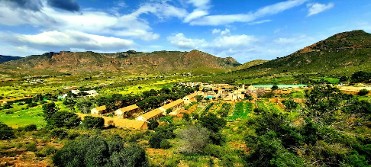
Danza libre y consciente al atardecer. Una experiencia única en la naturaleza que culmina con la aparición de las primeras estrellas bajo el cielo del Cabezo de la Jara y la observación astronómica a través del telescopio del Observatorio Astronómico del Cabezo de la Jara. Reserva y más información en: yogaycielo.com / Cristina 617 56 96 58

Monuments
Calasparra
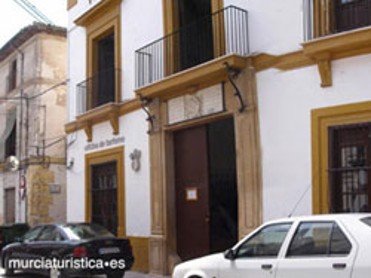
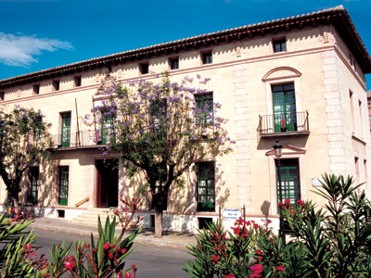
It is home to the Municipal Tourist Office, the Archeological Museum . It was the property of the Melgarejo family, the Counts of El Valle de San Juan.
Monuments
Calasparra
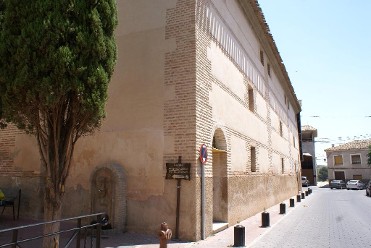
Construida en el siglo XIV, fue totalmente restaurada entre los años 1730 y 1731 por el maestro alarife Diego Gutiérrez y mas recientemente en 2009 ampliando el espacio expositivo y mejorando su accesibilidad. Ha tenido, a lo largo de la historia, diversos usos: fue mesón y granero de la Orden de San Juan y formó parte de las Casas-Palacio del Comendador que ocupaban junto con el hospital y el huerto toda la manzana, cárcel durante la Guerra Civil, escuela. Actualmente alberga la Escuela Municipal de Música.
Monuments
Totana
Después del traslado del Concejo desde la villa de Aledo hasta el «arrabal de Totana» se construyó a lo largo del siglo XVI un edificio para albergar esta institución. En el siglo XIX fue remodelado y restaurado en 1990. Aún se conservan en el último piso los techos de madera y las bóvedas del sótano.

Holiday accommodation
Caravaca de La Cruz
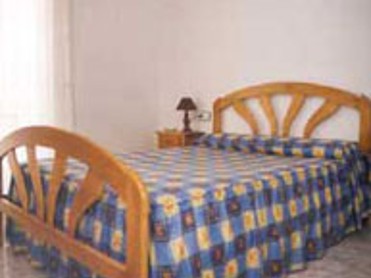
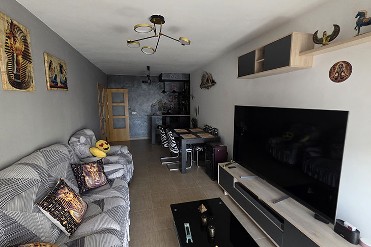
Vivienda de mi propiedad para uso turístico, ubicada en la localidad de de caravaca de la Cruz (Murcia) calle madrid N6 4b.

Inns
La Ñora (Murcia)
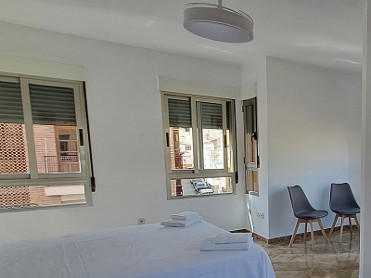
Edificio San Esteban es un establecimiento de alojamiento situado en La Ñora, Murcia, destinado tanto a estancias cortas como a estancias de mayor duración. El edificio dispone actualmente de 27 habitaciones, con diferentes configuraciones y capacidades, incluyendo habitaciones individuales y habitaciones equipadas con literas. El alojamiento está orientado a estudiantes, profesionales, trabajadores desplazados, familias y viajeros que buscan una estancia práctica y funcional en una zona bien comunicada con Murcia. Las habitaciones disponen de mobiliario para la estancia, armarios y zonas de trabajo, y el establecimiento cuenta con servicios y espacios comunes destinados a facilitar una estancia cómoda. Entre los servicios disponibles se encuentran conexión Wi-Fi, cocina compartida, zona de comedor, lavadora y zonas comunes, además de diferentes equipamientos según el tipo de habitación. El establecimiento es de no fumadores y ofrece distintas configuraciones de alojamiento para adaptarse tanto a viajeros individuales como a estancias de varias personas. Su situación en La Ñora permite un acceso cómodo a Murcia capital, zonas universitarias, servicios, comercios y transporte del entorno.