

Museums
Cartagena
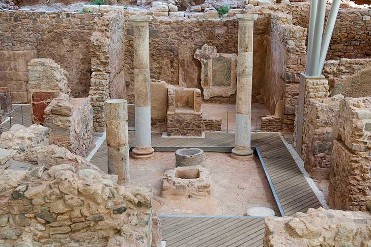
The Roman Forum Museum stands as the entrance to one of the largest urban archaeological parks in Spain. Throughout its various halls, where a careful selection of pieces is exhibited, you will be able to learn about the long history of Cerro del Molinete from today back to the old Carthago Nova. The visit concludes with a tour of important remains of the glorious Roman era that invite you to stroll through them: the Curia or local senate with its richly decorated marble pavement; the Colonial Forum, the city’s neuralgic centre, the distribution of which symbolised at various levels the hierarchy between the divine and the human; the Sanctuary of Isis where the mystery cults of the Egyptian gods were celebrated; the old roads with cart tracks; the port’s thermal baths and in particular its magnificent entrance portico with its original flooring; and to finish the Atrium Building, with its high walls and pictorial decorations that transport you to the great banquets of the Roman Empire.
Hotels
Ricote
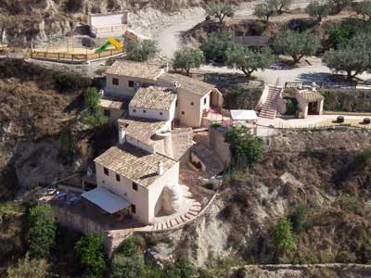
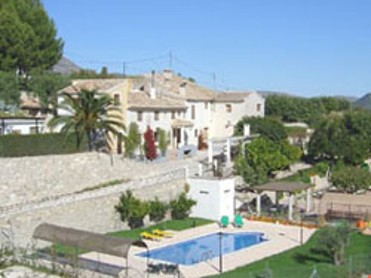
Situada en el paraje de la charrara en la ladera de la Rambla de Benito. El núcleo originario de esta construcción está formado por un molino de cubo al cual se encuentran anexos los diferentes cuerpos que forman la casa, los cuales forman varias alturas aprovechando la orografía del terreno. El alojamiento ha sido reformado respetando los elementos constructivos originales, utilizando muebles y decoración rústica.
Rural houses
Barranda (Caravaca de La Cruz)
Teléfonos: 968 702 089 606 567 543
Monuments
Ojós
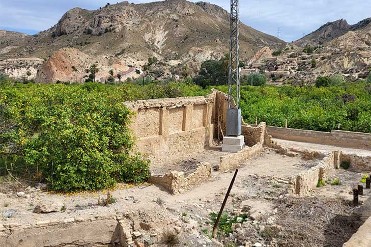
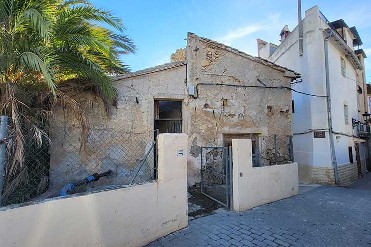
Se localiza a la salida del municipio en dirección a Villanueva del Segura, junto a la acequia Ojós-Villanueva. Actualmente son escasos los elementos que se conservan del molino, que originariamente fue harinero y posteriormente se empleó para picar esparto a partir de 1919. El molino tenía tres batanes que con el constante impacto de los mazos machacaban el esparto, que era mojado previamente en la balsa existente para ello y trabajaban mujeres de Ojós, Villanueva y Ulea, las llamadas “picaoras”.
Monuments
Ojós
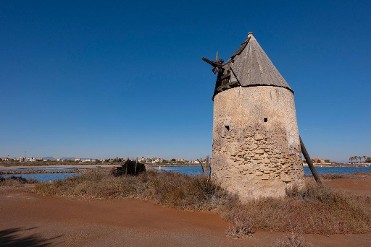
Se remonta al siglo XIX y funcionaba aprovechando la corriente de agua que discurre por la Acequia Ojós-Villanueva, que movía las ruedas con las que se molía el trigo para obtener la harina. Con posterioridad también fue una estación eléctrica o fábrica de luz, cuyo registro de legalización como industria data de mediados del siglo XX y poseía una bomba de pistones que permitía elevar el agua. Conserva en su interior diversas maquinarias y será rehabilitado y puesto en valor próximamente.
Lugares de interés
La Manga San Javier (La Manga del Mar Menor)
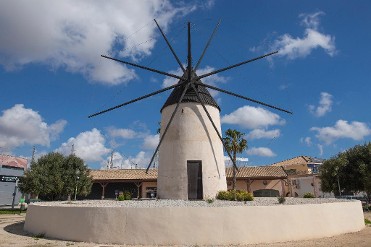
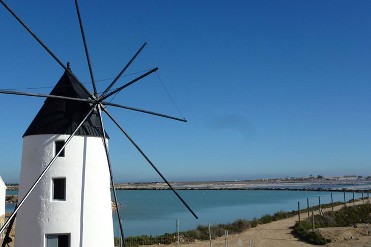
The salt Windmill of Veneziola, which still displays its spire and part of its machinery, was built very close to the sea to facilitate the transfer of water and propel it to the detection pools where it was left to evaporate, thus obtaining salt. Salt mill windmills typically have a height ranging from 8 to 12 meters. The diameter of their circular base is between 6 and 10 meters. The upper part or roof is called the spire, and the blades that originated from it could measure from 10 to 14 meters, and on them, sails were attached. Like the boats of the local fishermen, these sails had a Latin shape, giving them one of their most distinctive features. This mill does not have the typical windows along its body; instead, a single opening appears on the front face, which served as the entrance to the machinery. Originally, it must have been made of wood, and only the frame remains today. In general, windmills consist of a series of wooden and iron gears that transmit the energy generated by the sails, driven by the wind. This one in La Manga preserves all that gear, and although not in very good condition, it continues to attract the attention of numerous strollers. The introduction of modern systems in salt processing work led to the abandonment of these ancient systems, leaving them today exclusively as tourist attractions.
Monuments
San Javier
WINDMILLS In the municipality of san Javier there are some windmills, most of them in poor condition, because they have not been used since the half of the XXth century. They are of Mediterranean style, the tower, horizontal axis crossed by four couples of rods, eight triangular candles and gyratory ceiling. His origin dates back to the XVII and XVIII th century. There are 6 mills of water, 1 mill of flour and 2 mills of salt. Location: San Javier, La Grajuela and the north area of La Manga del Mar Menor, and they are registered as "Cultural Heritage Site" (Bien de Interés Cultural).
Monuments
San Pedro del Pinatar
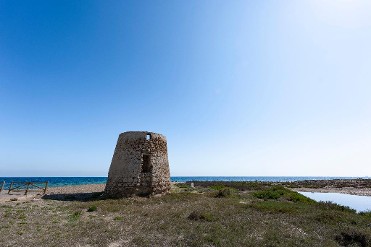
Fueron construidos en el primer tercio del siglo XX, lo que permitió la introducción de nuevos elementos y materiales para la construcción de los fines que pretendían, como es el trasvasar agua desde los canales procedentes del Mar Menor hacia las balsas calentadoras de las salinas. Estos molinos funcionaron hasta principios de la década de los años setenta, fecha en la que se instalaron bombas eléctricas para llenar las charcas de las salinas. Acceso restringido. Sólo visita exterior.
Lugares de interés
La Manga San Javier (La Manga del Mar Menor)
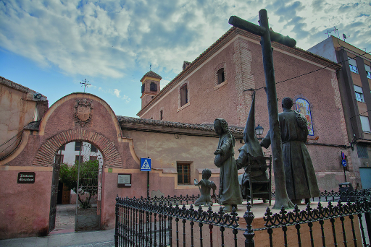
The salt mills crushed the salt clumps extracted from the salt pans of the Mar Menor. On their blades, which could measure between 10 and 14 meters, Latin sails were tied, identical to the sails used by the fiserment of the Mar Menor on their boats. In the salt pans, other types of mills could also be found, whose function was to extract seawater and transport it to the resevoirs of the salt pans. These mills were built very close to the sea to facilitate the transer of water and allow it to evaporate to obtain salt. As examples of these two uses, we find the mills in Pudrimel, one for lifting water and the other for grinding salt. Of these two mills, only the tower is preserved. Both types of salt mill now bear witness to the economic importance that the salt industry and trade had in the region.
Monuments
Cieza
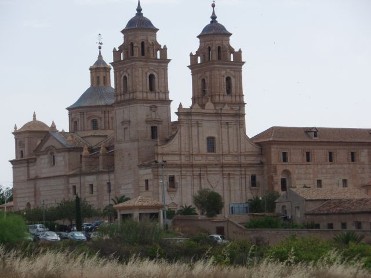
At mesones street, we find the Monastery of the Inmaculate Conception, founded in 1750. The building contains a cloister of extraordinary simplicity and austerity around wich all monastic life is developed. The church, with only one nave and without a streetfacing front, opnes onto an atrium belonging to the Monastery, wich is acessed by a semicircular arch in the center of wich is the stonecarved crest of the founders.
Monuments
Guadalupe (Murcia)
El Monasterio de los Jerónimos, hoy sede de la Universidad Católica de San Antonio, es conocido como el Escorial Murciano y su belleza cautivará al viajero, que lo descubrirá rodeado de palmeras y frutales.
Monuments
Murcia
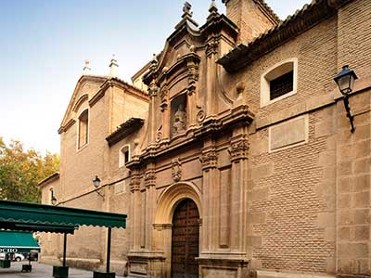
La iglesia conventual de Santa Ana es el tercer templo desde la fundación del convento en 1490. Se debe a los proyectos de fray Antonio de San José y Toribio Martínez de la Vega. Los autores de la portada son Lucas de los Corrales y Andrés Martínez de la Vega. El interior está decorado con bellas pinturas geométricas de color azul y está presidido por el retablo de José Ganga Ripoll, que desobedeciendo los deseos de las religiosas encargó la labor decorativa -trece esculturas- a Francisco Salzillo. Frente a él, el coro de líneas curvas y rectas que producen la sensación de movimiento. La ornamentación interior a base de estarcidos con formas mixtilíneas y pseudovegetales, realizadas originariamente con lapislázuli dentro de los cajeados de los elementos estructurales (inicialmente pintados en ocre) y hoy repintadas en una reciente restauración, era análoga a la que bajo órdenes de Cosme Carreras se ejecutó en la iglesia de las Peñas de San Pedro, por lo que habría que atribuirlos al pintor Agustín Cano. La iglesia responde al sistema tradicional de iglesia murciana del primer tercio del siglo XVIII, a base de capillas hornacinas entre contrafuertes, presentando los típicos achaflanados en los pilares del crucero y en los abocinados de los arcos de acceso a las capillas laterales.
Monuments
Caravaca de La Cruz
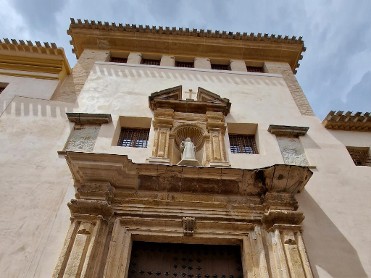
Da nombre a la calle en que se encuentra situado, siendo ésta una de las arterias caravaqueñas de más arraigo e historia de la ciudad. Fue en el año 1577 cuando un grupo de personas devotas hace una petición para que se funde un monasterio de Santa Clara en la villa de Caravaca, recibiéndose una Real Provisión en 1582 pidiendo información de donde se podía ubicar este convento y si habría personas dispuestas a contribuir en su fundación. Así el Ayuntamiento ofreció la antigua ermita de San Bartolomé y las construcciones anexas que los jesuitas acababan de abandonar para instalarse en su nuevo colegio de la C/ Mayor, e informó que D. Ginés de Perea, antiguo Alcalde Mayor, estaba dispuesto a donar todos sus bienes a su muerte para la fundación de dicho convento, que junto a los donados por Dña. Catalina de Robles podrían ser suficientes para llevar a cabo las obras. Así las cosas cuatro años después llega la autorización formal para la fundación del Convento, pero por razones económicas las obras no comenzaron hasta 1609 en los terrenos cedidos en un principio. Así pues la fundación del Convento de Santa Clara se celebra solemnemente el 27 de septiembre de 1609. Se aprovechan parte de las edificaciones que ya había en pie y se van adaptando y anexando otras, así la iglesia fue en un primer momento la antigua ermita que les había sido cedida. No obstante, y debido a la escasez de medios, tónica común en la sociedad del siglo XVII caravaqueño, no fue hasta finales de siglo y principios del siguiente cuando se acomete un proyecto de adecuación integral tanto del monasterio como de la iglesia, consiguiendo las monjas el dinero necesario para el mismo de las herencias y donaciones que les iban haciendo. En 1718, coincidiendo con la festividad de Santa Clara, se inaugura la nueva iglesia, y unos años más tarde se hacen ampliaciones en el Convento anexando unas viviendas propiedad del mismo. En la cúpula de la iglesia existe un pequeño orificio por el que las madres clarisas dejan caer miles de pétalos de rosa en la mañana del día 4 de mayo cuando la Stma.y Vera Cruz visita la iglesia. La estructura actual del monasterio de monjas claras de Caravaca de la Cruz es en líneas generales, la misma que tenía durante la época barroca de su construcción, ciñéndose a los postulados de las casas de religión franciscanas. En el año 2019, la fachada ha sido sometida a un delicado proceso de restauración. Entre sus ocupaciones, las Monjas Claras elaboran dulces artesanos y tradicionales.
Monuments
Murcia
El convento de clarisas capuchinas descalzas, fue fundado por la beata María Ángela Astorch, bajo el patrocinio de don Alejo Boixadós Llull, inquisidor de Murcia. Procedente de tierras catalanas llegó a la ciudad de Murcia, junto con otras cuatro religiosas, el 29 de junio de 1645. Al monasterio se le dio por titular la Exaltación del Santísimo Sacramento. La Comunidad de religiosas pasó por varios momentos duros a lo largo de su historia: padeció el azote de la epidemia de peste que asoló las poblaciones de Levante de España entre 1647 y 1650; también se vio afectada por la inundación del 14 de octubre de 1651. Tras tener que permanecer las religiosas alojadas durante unos años en la residencia de los jesuitas de Santa María del Monte, en el lugar de las Ermitas, regresaron definitivamente el 22 de noviembre de 1654 al edificio ya reedificado.


