Natural areas
Cartagena
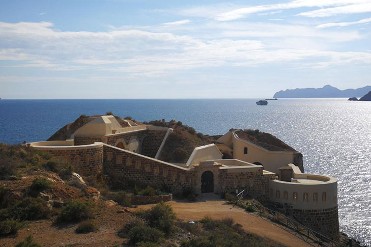
On the central stretch of the coast, a large stone mass rises above the waters of the Mediterranean. The materials we can find there are mainly limestone in nature, with both metamorphic and volcanic rocks present. Beaches, cliffs and small coves endow this place with great scenic value. Information and Environmental Awareness Points: 968 228 937 - 968 228 925
Natural areas
Abarán
Blanca
Fortuna
Molina de Segura
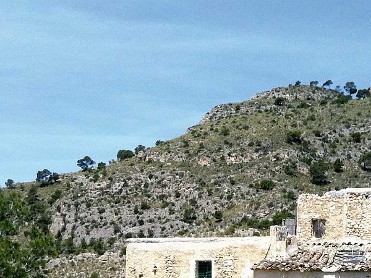
The Sierra de la Pila Regional Park is located in the north-east of the Region of Murcia in the municipalities of Abarán, Blanca, Fortuna and Molina de Segura, closing the southern part of the Altiplano region. Its enormous environmental, biological, geomorphological and cultural richness, as well as its good state of conservation, more than justifies its protection. In addition to being a Regional Park, it is also protected at European level: Special Protection Area for Birds (SPA) due to the presence of an important colony of red-billed choughs and a Site of Community Importance (SCI) due to the presence of thirteen habitats of community interest, of which four are of priority interest. This steep and rugged mountain range, whose maximum altitude is "La Pila" peak at 1,265 metres, has been little altered by humans, with few population centres in the surrounding area, the most important being the small hamlets of La Garapacha and Fuente Blanca. Contact: sierradelapila@listas.carm.es (mailto:sierradelapila@listas.carm.es) More info: www.murcianatural.carm.es (http://www.murcianatural.carm.es) Sierra de la Pila Regional Park Brochure: (https://murcianatural.carm.es/c/document_library/get_file?uuid=85bffa9e-79a9-4978-9099-25494ef45c0e&groupId=14) Sierra de la Pila Regional Park Map: (http://www.murcianatural.carm.es/c/document_library/get_file?uuid=6d121710-f063- 4324-8dc5-fb7bc47134f6&groupId=14) Geological Guide to the Sierra de la Pila Regional Park: (http://www.murcianatural.carm.es/c/document_library/get_file?uuid=379ddb47-ffaa-41ae-924f-a922bd4a0047&groupId=14) Construction typologies in the Sierra de la Pila Regional Park: (http://www.murcianatural.carm.es/c/document_library/get_file?uuid=b9b29c75-8a2c-4518-94f9-b4dca949911b&groupId=14) PORN Regional Park Sierra de la Pila: (https://www.borm.es/eli/es-mc/d/2004/5/14/43/dof/spa/pdf)
Natural areas
Mazarrón
The Protected Landscape of the Sierra de las Moreras is a coastal mountain range that raises by the banks of the Mediterranean. The limestone is the predominant material in this area, which is located in the central part of the regional coastline, close to other protected sites such as La Muela y Cabo Tiñoso or Calnegre y Cabo Cope. Environmental Outreach Centre and Information point: 968 228 937 – 968 228 925.
Natural areas
Yecla
La abrupta Sierra de Salinas es un macizo montañoso de mediana altitud, lindante con tierras alicantinas. Se localiza en el sector nororiental de nuestra geografía regional. De la misma manera que La Pila, El Carche o Espuña, estas montañas también forman parte de las Cordilleras Béticas, siendo su roca de carácter calcáreo. Puntos de Información y Divulgación Ambiental: 968 228 937 - 968 228 925
Lugares de interés
Santa Ana (Jumilla)
Ruta de gran interés que discurre por un área montañosa de gran belleza paisajística y alto valor ambiental. En su recorrido nos encontramos con numerosos enclaves de especial importancia histórica. La Sierra de Santa Ana se localiza 6 km al sur de Jumilla, teniendo acceso asfaltado y diversas pistas forestales y senderos.
Natural areas
Jumilla
Yecla
Download Brochure Regional Park Sierra del Carche
Campsites
El Berro (Alhama de Murcia)
El Cámping con 18.000 metros cuadrados, 11 cabañas de madera, de 2 a 6 plazas, perfectamente equipada, bar, zona de acampada para caravanas, piscina deportiva, parque infantil y zona de barbacoas
Natural areas
Aledo
Alhama de Murcia
Librilla
Mula
Pliego
Totana
The Regional Park of Sierra Espuña is located in the heart of the Region of Murcia. It is a mountainous massif whose nature is fundamentally calcareous. This massif surpasses 1,500 meters of altitude above sea level. At its summits there are interesting karstic landform. Information and Environmental Points: +34 968 228 937 - +34 968 228 925 Download Brochure Regional Park Sierra Espuña
Hotels
La Unión
El Hotel Sierra Mar se encuentra en el centro de La Unión, Murcia, a 15 minutos en coche de Cartagena y a 15 minutos en coche del Valle de Escombreras donde entre otras empresas se encuentra Repsol. Así mismo también esta a 20 minutos de las playas del Mar Menor y Mar Mediterráneo, La Manga del Mar Menor y Cabo de Palos. Ofrece habitaciones con aire acondicionado, frigorífico, conexión Wi-Fi gratuita y TV de pantalla plana. El Sierra Mar cuenta con recepción 24 horas, cafetería y salón de TV con chimenea, sillones y sofá. Los huéspedes pueden jugar al billar, futbolín o a los dardos en la cafetería del hotel y hay máquinas expendedoras que dispensan aperitivo, bebidas y café a disposición de nuestros clientes las 24 horas. Todas las habitaciones son funcionales y disponen de escritorio y baño privado con artículos de aseo gratuitos. El hotel también cuenta con una zona con ordenadores, disponibles por un suplemento. El Hotel Sierra Mar ofrece servicio de lavandería, limpieza en seco. Está a sólo dos minutos a pie de la parada de autobús más cercana. En La Unión se encuentra la mina Agrupa Vicenta la Segunda Mina a nivel de Europa visitable y se celebra El Festival de Flamenco del Cante de las Minas reconocido Internacionalmente. Además La Unión son famosas también por la Semana Santa con sus procesiones y sus imágenes.
Natural areas
Pliego
The Sima de la Higuera (Cave of the Fig Tree) in the municipality of Pliego, is the largest cave system known in the Region of Murcia's subsoil. More than 5,500 meters long, it features some very special characteristics due to its "hypogenic" (formed in the interior of the earth) nature. Its entrance is located in Monte del Cabezo y Cuesta de Aledo, at an elevation of 485 meters, next to a fig tree, for which it was named. In it some unique speleothems (types of formations in the cavity due to mineral deposits, such as stalactites and stalagmites) have developed, as well as a whole series of "hypogenic" cavities of hydrothermal origin, among the most representative in Europe. The type of karst system present here can only be found in 5-10% of the caves on the entire planet, with morphologies and structural features of worldwide interest, such as its double cone or "Paradise" chamber. A proposal is currently being advanced for the classification of its more than 22 hectares as a Natural Monument.
Lugares de interés
Dolores (Torre Pacheco)
La Sima de las Palomas is located on the southern slope of Cabezo Gordo, the only mountainous elevation in the municipality of Torre Pacheco, and a historical reference for navigators and residents of the Campo de Cartagena. In 1991, the accidental discovery of the jawbone of a Neanderthal prompted the scientific excavation of la Sima de las Palomas, the most important archaeological site of Neanderthal man in the Spanish Mediterranean. The excavation work has made it possible to recover more than 300 skeletal fragments, between bones and teeth, which highlight the low height of the adults despite their great robustness typical of Neanderthal muscles. They have been dated at 50,000 years, i.e. during the last ice age. The three almost complete skeletons, excavated in an anatomical connection and in a good state of preservation, are of exceptional importance for the study of the Neanderthal fossil record. The young woman "Paloma" and the child were found under an accumulation of large stones, with knees and elbows bent and hands next to the face, suggesting that they could have been buried intentionally. The information that these remains offer us is fundamental to understand the long evolutionary chain of the human being. The Neanderthals of la Sima de las Palomas left abundant remains of the animals they used to hunt, from horses, deer, aurochs and the Spanish goat to turtles and rabbits. Research into the phytoliths on their teeth indicates that they also ate vegetable matter. In order to obtain and prepare food, they carved tools from flint, limestone, marble, calcite, quartz and quartzite, which have been found at the site, typical of Mussolithic technology in the Middle Palaeolithic period. This hill of aggregates and quartz is also of great biotic, landscape and cultural interest. Declared a Protected Landscape in 1998, it has a typical fauna and an almost exclusive flora.
Holiday accommodation
Murcia
Este apartamento está situado en Murcia en el barrio de Santa Eulalia y dispone de aire acondicionado y balcón. El puente romano queda a 600 metros. Hay WiFi gratuita en todas las instalaciones. El alojamiento cuenta con zona de estar y cocina de unos 45 m2, TV de pantalla plana y consola Xbox 360, ordenador conectado,uso de lavadora y dos bibicletas plegables para uso de los huéspedes. El Apartamento Simón se encuentra a 200 metros de la plaza de toros de Murcia y a 300 metros de La Condomina. Capacidad para 8 personas: 2 camas de matrimonio, 2 de cuerpo y sofá cama, 3 dormitorios y dos cuartos de baño, todo muy amplio. Apartamento ideal para familias y grupos grandes, en pleno centro historico, junto a una ínfinidad de los mejores restaurantes y bares de Murcia, seguro que te encanta. BICICLETAS GRATUITAS. PARKING VIGILADO GRATUITO. SE ACEPTAN MASCOTAS BAJO PETICION.
Holiday accommodation
Murcia
Apartamento ideal para familias y grupos grandes, en pleno centro historico, junto a una ínfinidad de los mejores restaurantes y bares de Murcia, seguro que te encanta. BICICLETAS GRATUITAS. PARKING VIGILADO GRATUITO. SE ACEPTAN MASCOTAS BAJO PETICION.
Monuments
Lorca
Archaeological Park of the Castle and Synagogue In medieval Lorca the castle, and under the protection of the Alfonsina Tower, housed the city's Jewish quarter. Excavations in this quarter have revealed what the Jewish houses of the time were like, with a rectangular floor plan, compartmentalised into rooms, and in which spaces can be identified for living rooms, kitchens, storerooms and other rooms that house different uses, as well as benches attached to the wall, jars, cupboards, raised bedrooms, etc. In the Jewish quarter of Lorca, the Hebrews established their synagogue, an exceptional example of Jewish religious art in Spain. The temple was built underground because according to the laws of the time it could not exceed the height of the churches and this, together with the fact that it was never converted into a Christian temple, has allowed the synagogue to be preserved in an exceptional state. The Archaeological Park of the Castle of Lorca has been conceived as a space to enjoy the finds excavated in the Jewish quarter through a walk through the streets of the archaeological remains of the Jewish quarter, discovering what their houses, their offices and traditions were like, and the feeling of Jewish spirituality with a visit to their exceptional synagogue.
Active tourism
Cartagena
La empresa Siroco Aventuras S.L., creada en 2011, está especializada en turismo sostenible, siendo colaboradora en diversos proyectos ecoturísticos con la Comunidad Autónoma de Murcia. Nos especializamos en el trabajo para grupos de personas con discapacidad. Llevamos los últimos 4 años desarrollando actividades para los colectivos de FREMAP. De igual modo realizamos eventos y colaboraciones con distintos ayuntamientos de la Comunidad Autónoma. Nuestro mayor interés es desestacionalizar el turismo en la zona dando a conocer la riqueza de sus ecosistemas, tanto marinos como terrestres, haciendo uso de del criterio de sostenibilidad.